Thursday, March 29, 2012

The Best Day Recipe


An ordinary morning. You are starting your ordinary day.
Do you want it to be ordinary?
Ask yourself a question: "What would I do if today was the last day of my life?"
I think your answer will be: "I would like it to be the best day of my life."
I don't want to upset you, but nobody can ever find out what day is going to be the last.
And so it's better to live each day of your life as if it is the last.
I'm not telling you to quit your job and spend all you money on traveling:)
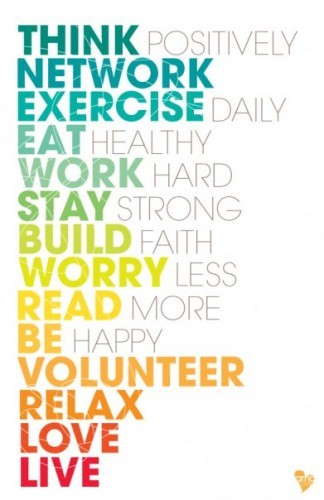
But you can live your life to its fullest by adding some simple things to each day.
It doesn't matter what is going on, but it does matter how you feel about it.
Do not forget that life is too short to be unhappy!
Here is my recipe for the best day on Earth!

Photo by Patric Shaw


Ingredients

1. A Handful of Happiness
Photo by Tracy Raver

Where can you find it? Take a look inside of you! Happiness doesn't come from the outside, it is within you. Each moment your life gives you a lot of opportunities to be happy. If you want to see them, you will. If you don't, it's up to you.

Photo credit: Women Are Like Nature!


2. A Handful of Love
Photo by Dani Brubaker

Love is the harmony of your soul. A little love can make a big difference to the whole world. We are one. Everyone and everything deserve your love as well as you do.
"You can search throughout the entire universe for someone who is more deserving of your love and affection than you are yourself, and that person is not to be found anywhere. You yourself, as much as anybody in the entire universe deserve your love and affection."
~ Buddha


3. A Handful of Gratitude
Photo credit: Cute Little Cats

Gratitude is one of the strongest positive feelings. We all have something to be grateful for. If you are grateful for everything that you have, you will get more things to feel gratitude for. And this feeling makes you feel good.
"Let us rise up and be thankful, for if we didn't learn a lot today, at least we learned a little, and if we didn't learn a little, at least we didn't get sick, and if we got sick, at least we didn't die; so, let us all be thankful."
~ Buddha

Photo by I Dani


4. A Handful of Dreams

Feel free to dream big dreams and make small steps towards them. You are the creator of your life. Every time you are doing something to achieve your goals you are growing.
"To dream anything that you want to dream. That's the beauty of the human mind. To do anything that you want to do. That is the strength of the human will. To trust yourself to test your limits. That is the courage to succeed."

Photo credit: DesktopWallpapers.ru


5. A Handful of Freedom

Feel free to do whatever you want to do! Do everything that makes you happy! Push the limits! Do you remeber"Yes Man" movie with Jim Carrey? Always say "Yes" if you feel that it is the right thing to do right now, this can be the way to your dreams.


6. A Handful of Creativity
Photo credit: Fine Glass Objects

Try to be creative in everything you do. Try to do your best every time you are doing something. Do not be afraid to use your imagination. It's such a pleasure to do something new. Feel the joy of creation!

Photo by Jamie Nelson


7. A Handful of Laughter

It's difficult to overestimate the role of laughter. It makes us feel good and unites us. In addition it is the best medicine! And it certainly can make any day brighter.

Photo credit: Amusing Animal World


8. A Game
Photo by Dani Brubaker

Life is a game. Don't take it seriously. Do you like to play games? Why not to play every day? Don't be afraid to lose, everybody can lose. One day you will be the winner!
"Our greatest glory is not in never falling but in rising every time we fall."

Photo credit: It's a Colorful World!


9. A Handful of Magic
Photo by Annie Leibovitz

Do you believe in magic? Well, you should. Life is full of miracles. In fact, life itself is a big miracle. There are so many things that are beyond our understanding.
"There are two ways to live: you can live as if nothing is a miracle; you can live as if everything is a miracle."

Photo credit: Desktop Wallpapers

10. A Holiday
Photo credit: It's a Colorful World!
Celebrate every day of your life! Let the spirit of holiday fill each corner of your heart. Why not? You live your life to its fullest and move towards your dreams!


Directions
Mix the ingredients and start the best day of your life! And do not forget to add some spice to make it spicy:)


Nutrition Facts
- Calories: 0
- Very good for your health
- Makes you feel good

Saturday, March 17, 2012

My Collection of SALWAR KAMEEZ


Wednesday, January 25, 2012

MY 21st BIRTHDAY is around the corner!


My 21st Birthday is around the corner dude. Almost done half preparations and still have few things to be done. Im not gonna celebrate my birthday grandly this time just am gonna celebrate it with the special children. Hope after im officially 21 things would be different for me as im getting older! :)

Sunday, January 8, 2012

Welcome 2012 ♥


Happy New Year All :))


Wish on list to be done in 2012 ♥

1.get a hairstyle makeover :D


2.change my style


3.learn how to bake and get pro with it!


last but not least ♥


Sunday, November 27, 2011

The Twilight Saga: Breaking Dawn


After waited so long, i saw it ! it’s great, though I still miss one or two scenes :)) 

Edward  looked so breathtakingly Handsome …as always !
Bella looked so amazing and beautiful one second and then she gets pregnant and gets scary !
Jacob was awesome too !
the Whole movie was Awesome !!! 


 Here are some scenes from the movie...♥ ♥ ♥


Thursday, October 13, 2011


What Is Deepavali?


Diwali (also spelled Divali in few countries) or Deepavali is popularly known as the festival of lights..A colorful festival that is celebrated by all Hindus worldwide is Deepavali, which is also known as the festival of lights. This festival usually falls around late October and November. One important practice that the Hindus follow during the festival is to light oil lamps in their homes on Deepavali morning. By lighting the oil lamps, the Hindus are thanking the gods for the happiness, knowledge, peace and wealth that they have received. The Hindus consider Deepavali as one of the most important festivals to celebrate.

The Legend -
There is even an interesting legend behind this festival. The story goes that Narakasura, a demon, ruled the kingdom of Pradyoshapuram. Under his rule, the villagers suffered a lot of hardship as the demon tortured the people and kidnapped the women to be imprisoned in his palace. Seeing his wickedness, Lord Khrishna set out to destroy the demon and the day Narakasura died was celebrated as Deepavali, the triumph of good over evil!

Preparations -
Preparation for Deepavali starts usually at least two to three weeks before the festival. It is known that the Hindus will be busy cleaning their houses to prepare for the festival. Some would even renovate their houses to prepare it for Deepavali. Usually the family will shop for new clothes and for accessories to decorate their homes. Prior to the festival, Indian shops will be selling festive items like Deepavali greeting cards, carpets, Punjabi suits and flowers. The Hindus will frequent these shops when they are shopping for Deepavali.

Celebrations -
The Hindus usually awake early in the morning of deepavali around 3am and the first ritual will be having an oil bath, which is an important feature of Deepavali. Hindus will be dressed in their new clothes on Deepavali. Most of the ladies would be clad in silk saris or Punjabi suits of various bright shades. Hindus particularly dislike dressing in black on that day, as they consider black an inauspicious color for the festival. Hindus would also pay their respects to the elderly and most families would go to the temple after having breakfast. This is also an important practice for them. The reason why they would be going to the temples is to pray to get happiness and prosperity on Deepavali. The houses would be decorated with oil lamps and children will play with firecrackers to celebrate the festival. On the first day, they would not go visiting but would stay at home to welcome the guests who visit them.

Food -

Visiting Hindus during Deepavali will be an interesting activity, as you will get to taste a wide variety of delicious food. In every home that you visit you are bound to be served with a tempting spread of sweets. Some of the popular sweets are halwa, burfi and laddu. Hindus love eating spicy food and for non-vegetarians they indulge in favorites like chicken tandoori, prawn sambal and fish head curry. In homes of Hindus who are vegetarians popular dishes like thosais, idlis and naans are prepared.


P/S:
 
Deepavali Day is always celebrated with a lot of food cooked by my grandma =)

Monday, September 19, 2011

Things I Should/Must DO this WEEK!!!

first and foremost my EXAM is just around the corner! so prepare well, i don't want to repeat the mistakes again and regret later! for sure i must study hard errmm errr any other words to replace it :D...yea study smart! i will do my best if i study well :P... i know i can do it! hope so..^_^
~I BELIEVE MYSELF! 

hav a nice day peeps! wish me luck!
Will be back very soon!

p/s : got a lot of things in my head & and i will throw it out in words just after the exams!

Friday, September 2, 2011

Wednesday, July 27, 2011

Today's Saying~


Every life is a story, make yours a best seller.


This saying is on a magnet that I have on my fridge. It is one that I have shared with many. It is one that inspires me every time I read it. . It also reminds me of the quote by Harald Anderson, In life we can have results or reasons. Does your life have results or does it have reasons?


Tuesday, July 26, 2011

Saturday, July 23, 2011

Indian weddings & meanings

According to Hindu religious texts, Brahma created man from the right shoulder and woman from his left shoulder. A woman is referred to as ''Vamangi'' or one who is on the left side. Throughout the marriage ceremony the bride sits on the right side of the groom. That is the place for strangers and acquaintances. Only after the ''Saptpadi'', when the bride and groom have exchanged marital vows, is the wife seated on the left side of the man.


Bride and groom are told about their duties and responsibilities in married life by priest. These vows direct the couple to a positive path of action. They help in promoting marital happiness for a lifetime.

Vows by the Husband

#
 I will consider my wife to be The better half. I will look after her just as I look after myself.

# Accepting her as in-charge of my home, I shall plan things in consultation with her.

# I will never express dissatisfaction about any shortcomings in my wife. If there are any, I will explain them to her lovingly. I will support her in overcoming them.

# I will always have faith in my wife. I will never look at another woman with wrong intent, nor have an illicit relationship.

# I will be affectionate and treat my wife like a friend.

# I will bring home all my income to my wife. The household expenses will be incurred with her consent. I will always make an effort to ensure her comfort and happiness.

# I will not find fault or criticize my wife before others. We will sort out our differences and mistakes in privacy by ourselves.

# I will have a courteous and tolerant attitude towards my wife. I will always follow a compromising policy.

# If my wife is unwell, or is unable to fulfill some of the responsibilities or through some misunderstanding behaves wrongly, I will not withdraw support or refuse to fulfill my responsibilities towards her.


Friday, July 22, 2011

Why indian wears bhindi /thilak on their foreheads ?


The dot or bindi also known as 'tika', 'pottu', 'sindoor', 'tilak', 'tilakam', 'bindiya', 'kumkum' and by other names. Pronounced as 'Bin Dee', the word bindi is derived from the Sanskrit word bindu, which means "drop". Bindi is an auspicious ornamental mark worn by Hindu girls and women on their forehead between the two eyes . Bindi is arguably the most visually fascinating in all form of body decoration. More than a beauty spot, the manga tika (bindi) indicates good omen and purity.


Traditionally Bindi is a symbol of marriage, very similar to western wedding bands. A red dot on the forehead is an auspicious sign of marriage and guarantees the social status and sanctity of the institution of marriage. Bindi were worn by married women in North India in the form of a little red dot. It denotes the woman's married status in most of the North Indian communities but in South India it is a prerogative of all girls to wear a bindi. The bridegroom's make-up is incomplete without Tilak, it is applied on the groom's forehead during the wedding ceremony. No festival or puja is complete without the tilak and sindoor. Red was chosen because that

color was suppose to bring good fortune into the home of the bride. The red mark made the bride the preserver of the family's honor and welfare. Over time, it has became a fashion accessory and is worn today by unmarried girls and women of other religions as well. No longer restricted in color or shape, bindis today are seen in many colors and designs and are manufactured with self-adhesives and felt.

The very positioning of the bindi is significant. The bindi is always worn on in the middle of the eyebrows, this is believed to be the most important pressure point of the human body. This point is known by various names such as Ajna chakra, Spiritual eye, Third eye meaning 'command', is the seat of concealed wisdom. It is the centre point wherein all experience is gathered in total concentration. According to the tantric cult, when during meditation the latent energy rises from the base of the spine towards the head, this 'agna' is the probable outlet for this potent energy. The red 'kumkum' between the eyebrows is said to retain energy in the human body and control the various levels of concentration. It is also the central point of the base of the creation itself — symbolising auspiciousness and good fortune.

Most religious Indians, especially married women wear a tilak or pottu on the forehead. It is applied daily after the bath and on special occasions, before or after ritualistic worship or visit to the temple. In many communities, it is enjoined upon married women to sport a kum kum on their foreheads at all times. The orthodox put it on with due rituals. The tilak is applied on saints and images of the Lord as a form of worship and in many parts of North India as a respectful form of welcome, to honour guests or when bidding farewell to a son or husband about to embark on an journey. The tilak varies in colour and form.

This custom was not prevalent in the Vedic period. it gained popularity in the Pauranic period. Some belive that it originated in South India.

The tilak or pottu invokes a feeling of sanctity in the wearer and others. It is recognized as a religious mark. It form and colour vary according to one's caste, religious sect or the form of the Lord worshiped.

In earlier times, the four castes (based on verna or color) - Braahmana,Kshatriya ,Vaishya and Sudra - applied marks differently. The brahmin applied a white chandan (sandalwood paste) mark signifying purity as his profession was of a priestly or academic nature. The Kshatriya applied a red kum kum mark signifying valour as he belonged to the warrior races. The Vaishya wore yellow kesar or termeric mark signifying prosperity as he was a business man or trader devoted to creation of wealth. The sudra applied a black bhasma, kasturi or charcoal mark signifying service as he support the work of the other three divisions. Also Lord Vishnu worshipers apply a chandan tilak of the shape of "U", Lord Shiva worshipers applied a tripundra bhasma, Devi worshippers applied red dot of kum kum.

The chandan, kum kum or bhasma which is offered to the Lord is taken back as prasad and applied on foreheads. The tilak covers the spot between the eye brows, which the seat of memory and thinking. It is known as the aajna chakra in the language of yoga. The tilak is applied with the prayer - "May i remember the Lord. May this pious feeling pervade all my activities. May I be righteous in my deeds". Even when we temporarily forget this prayerful attitude the mark on another reminds us of our resolve. The tilak is thus a blessing of the Lord and protection against wrong tendencies and forces.

The entire body emanates energy in the form of electro-magnetic waves - the forehead and the subtle spot between the eye brows especially so. That is why worry generates heat and causes a headache. The tilak or pottu cools the forehead, protects us and prevents energy loss. Sometimes, the entire forehead is covered with chandan or bhasma. Using plastic reusable 'stick bindis' is not very beneficial, even though it serves the purpose of decoration.

In the past few decades, not only married women have taken up this beautiful accessory. Girls of all ages enjoy wearing a variety of styles and colors. Today, the bindi is more about the mood and occasion. They are often matched with the color clothing a person is wearing. Today, bindi is more of a fashion statement than anything else, and the number of young performers sporting bindis is overwhelming even in the West.

This unique to Indians and helps to easily identify INDIAN PEOPLE anywhere.


Nose piercing began in Indian Hindu culture in the 16th century when Moghul Emperors introduced the practice. When, and how, a Hindu woman wears a nose piercing may signify important aspects of her life.


Piercing in Girls

  • Girls as young as 5 years old get nose piercings in India, depending on local custom. Nose piercings are generally marks of beauty and social standing and/or to honor the goddess Parvathi.
Health
  • In Ayurvedic medicine, piercing the nostril is believed to help women with menstruation and child birth.
Wedding Day
  • On a woman's wedding day, the nose piercing becomes a significant indicator of this major life event. The nose stud is replaced with a nose ring, or a Nath, which is hooked by a chain to the bride's ear or hair.
The Widow
  • A married Hindu woman will often wear a nose piercing of some kind until she is a widow. Once her husband dies, she permanently removes the jewelry.